
Will Iran Close the Strait of Hormuz? What Investors Must Do Before Oil Spikes
On January 26, 2026, The Guardian reported that Iran was preparing potential attack scenarios targeting the U.S. Navy. This development went beyond routine military tension and reignited market concerns over a possible disruption of the Strait of Hormuz, one of the most critical chokepoints in global oil logistics.
When such geopolitical shocks emerge, a disciplined investor does not panic-sell. Instead, the focus should be on calmly assessing how these risks may ripple through asset prices.
In this article, we examine how Iran-related geopolitical risks could affect financial markets and explore investment strategies through the lens of historical precedents.
✔ Iran’s Military Posturing and Pressure on Global Supply Chains
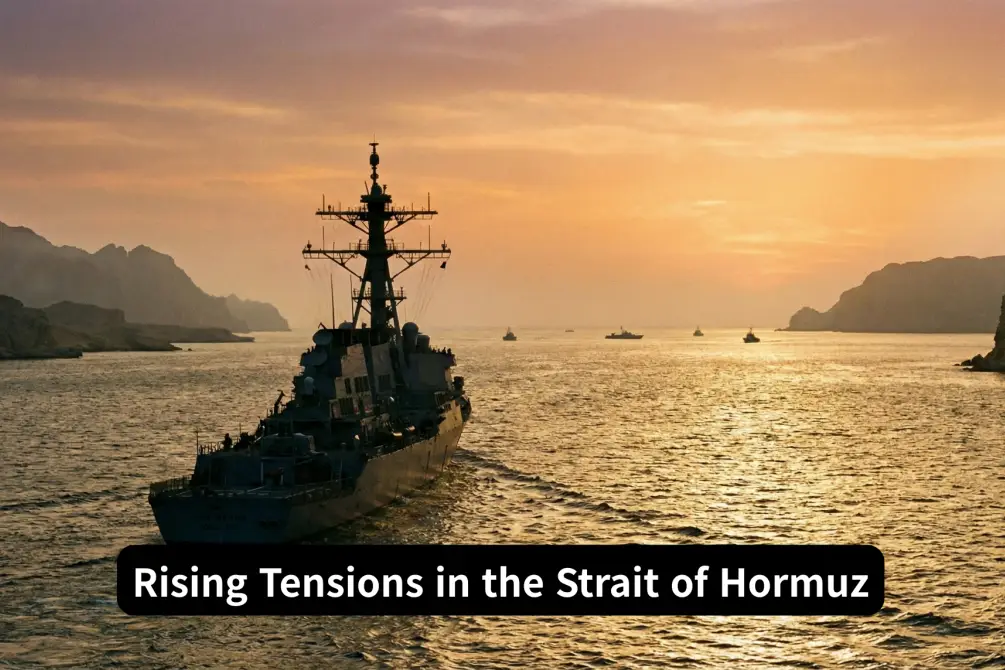
According to The Guardian, Iran has recently redeployed missile bases and drone forces within operational range of the U.S. Navy’s Fifth Fleet. This move is widely interpreted as a demonstration of real military capability rather than a symbolic political signal.
Military tension around the Strait of Hormuz, through which roughly 20 to 30 percent of global crude oil shipments pass, immediately destabilizes energy markets. Even a temporary blockade could disrupt oil supplies and trigger a sharp spike in crude prices.
Energy economists warn that a short-lived closure alone could significantly raise global logistics costs and reignite inflationary pressures. Such cost shocks would ultimately squeeze corporate margins and weigh on earnings and equity valuations.
⚡ Geopolitical Significance of the Strait of Hormuz (2026)
| Category | Key Figures & Impact | Notes |
|---|---|---|
| Daily oil flow | About 21 million barrels per day | Roughly 21% of the world’s total oil consumption |
| Main cargo | Crude oil, LNG, and petrochemical products | Especially critical for countries with low energy self-sufficiency |
| Alternative routes | Very limited (such as Saudi pipelines) | Few safeguards to prevent price spikes if the strait is blocked |
*Note : The Guardian – Iran prepares possible attack on US Navy
✔ Does History Repeat Itself?: Geopolitical Crises and Asset Price Reactions
Geopolitical risks originating in the Middle East have repeatedly shaken financial markets. From the oil shocks of the 1970s to the killing of General Soleimani in early 2020, a clear pattern has emerged: volatility peaks during periods of heightened tension.
Gold has consistently strengthened as uncertainty rises, reaffirming its role as a safe-haven asset. Oil prices, meanwhile, have tended to spike sharply in the short term due to supply disruption fears. Equity markets usually experience an initial correction, followed by a gradual recovery.
However, the situation in 2026 differs from past episodes. With ongoing U.S.–China rivalry, supply chain restructuring, and geopolitical bloc formation, the pace of recovery could be slower than historical norms.
⚡ Typical Asset Responses During Geopolitical Crises
- Gold: Price resilience and upside during heightened uncertainty
- Crude Oil (WTI): Elevated short-term volatility due to supply risks
- Equities (S&P 500): Near-term correction; relative strength in energy and defense sectors
✔ Investment Strategy Scenarios: Gold, Energy, and Defense
Gold deserves primary consideration in the current environment. While it does not generate yield, gold has historically served as an effective hedge during periods of currency debasement and systemic risk. With central banks continuing to increase gold reserves, geopolitical instability may provide additional upward momentum.
Focus then shifts to the energy and defense sectors. As conflict risks rise, governments tend to increase defense spending and accelerate investments in energy security. Beyond oil refiners, companies involved in LNG infrastructure, maritime defense systems, and drone countermeasure technologies may benefit over the medium to long term.
⚡ Sample Portfolio Allocation for Geopolitical Risk
- Safe assets (Gold, USD): 20–30%
- Energy sector: 10–15%
- Defense sector: Approximately 10%
- Cash: At least 15%
*Note: World Gold Council – Gold Demand Trends 2025-2026
✔ Key Counterarguments and Risks to Monitor
Not every geopolitical headline leads to actual conflict. Iran’s actions may serve domestic political objectives, and a diplomatic breakthrough could quickly reverse fear-driven price moves.
In addition, U.S. shale production capacity and strategic petroleum reserve releases offer far stronger buffers than in previous decades. For this reason, a strategy emphasizing risk management and cash preservation may be more prudent than aggressively chasing momentum.

INSIGHT
This Guardian report raises a critical question: should investors fear the crisis, or prepare for it?
While geopolitical risk itself is uncontrollable, portfolio construction is not. Rather than reacting emotionally to headlines, investors should focus on where capital is flowing and how global supply chains are evolving.
⚡ A 3-Step Action Plan
- Review gold and energy exposure in your portfolio and consider phased adjustments.
- Identify defense-sector companies likely to benefit from rising geopolitical tension.
- Maintain sufficient cash to capitalize on extreme fear-driven market dislocations.
For the prepared investor, crises can become opportunities. May the turbulence of the Strait of Hormuz lift your portfolio higher rather than pull it under.
This has been Michael from Wstorybook.