
How to Overcome Lethargy: Just Do the Dishes
Have you ever woken up on a Monday morning feeling both physically sluggish and mentally drained, even after a full weekend of rest?
That has been exactly my experience lately. As I kept asking myself, “Why does this keep happening?” I realized the answer had little to do with physical fatigue. From a cognitive psychology perspective, this kind of lethargy appears when the brain and mind fail to properly reset before a new week begins.
Lethargy is not simple tiredness. It is a signal from your brain. It means a negative predictive model is active, quietly telling you, “What you are doing right now has no meaning.”
Today, I want to share practical, science-backed ways to escape this psychological stagnation and regain everyday vitality.
1. Burnout vs. Lethargy: Energy Loss vs. Energy Misalignment
Many people confuse burnout with lethargy, but they are fundamentally different states and require very different solutions.
Burnout is like a car that has run out of fuel. Lethargy, on the other hand, is a car with a full tank but no clear direction. The engine is running, yet the steering wheel is turned the wrong way.
Burnout means your energy is depleted. In that case, rest is the correct answer. Lethargy is different. It is a state where energy exists but has nowhere meaningful to go.
People who feel lethargic are rarely doing nothing. They clean their desks instead of studying, reorganize files instead of starting important work, or scroll endlessly through short videos for hours. Energy is being spent, but not toward growth or purpose.
When effort is disconnected from meaning, the brain interprets it as idleness. That disconnect creates the feeling of emptiness.
| Distinction | Burnout | Lethargy |
|---|---|---|
| Core cause | Energy depletion | Loss of meaning and control |
| Symptoms | Physical exhaustion, emotional fatigue | Low motivation, chronic procrastination |
| Solution | Rest, sleep, nutrition | Small wins, reframing your purpose, environment change |
2. Why Lethargy Appears Even When You Work Hard
One major cause of lethargy is learned helplessness. This occurs when repeated effort fails to produce meaningful results. Over time, the brain concludes that trying is inefficient and stops allocating energy altogether.
Interestingly, even unexpected success can trigger helplessness.
Research indicates that when people experience good results through luck rather than understanding, they can lose their sense of control. If the cause of success is not analyzed, the brain learns that outcomes are arbitrary and unrelated to effort.
When this happens, the brain assumes the world does not respond to intention.
Whether we fail or succeed, ignoring the causal process is equivalent to handing control of our lives over to chance.
This is why people who value long-term growth focus less on outcomes and more on process. Reflecting on how today’s actions produced specific changes strengthens the brain’s sense of agency and protects against helplessness.
*Note: APA(American Psychological Association) – Learned Helplessness
3. Why Small Actions Work Better Than Big Goals
When you feel lethargic, setting ambitious goals like “I will wake up at 5 a.m. and run every day” is often the worst possible strategy. A broken predictive model increases the likelihood of failure, which only reinforces helplessness.
What works instead is a micro action with immediate feedback.
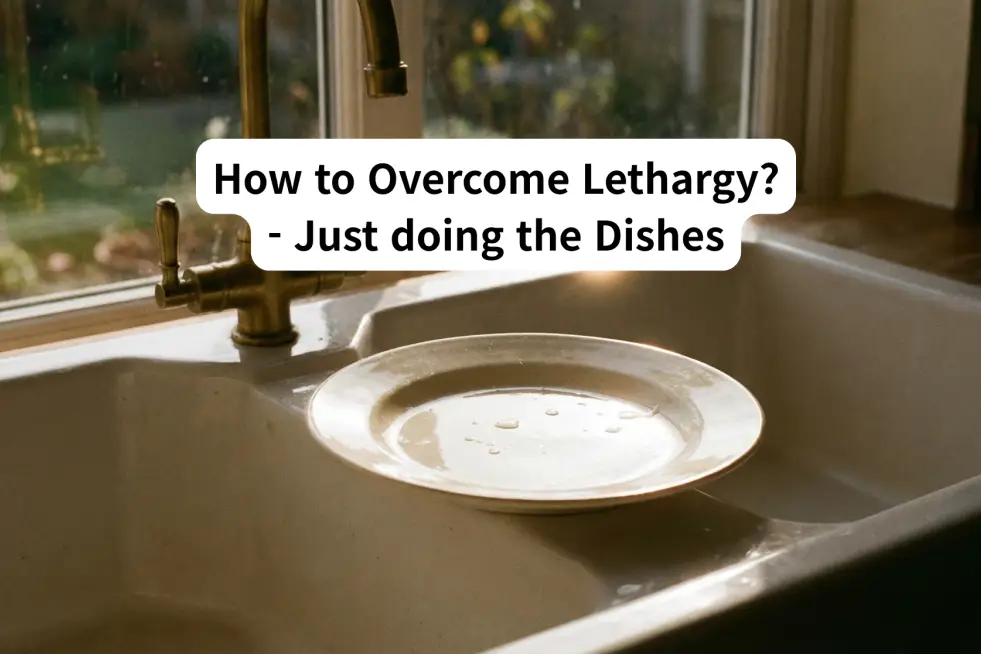
Doing the dishes creates a visible transformation in just a few minutes. Dirty plates become clean. The result is undeniable.
I do this myself. When I feel restless or unable to focus, I wash the dishes. More often than not, the mental fog lifts shortly afterward. The brain responds to clear cause and effect.
Small successes send a powerful message to your nervous system: “My actions still matter.”
Helplessness is not a wound. It is a loss of direction. What we need in that moment is not a grand vision, but a small, controllable change we can make right now.
* For a blog that clearly outlines the symptoms and treatments of lethargy: Verywell Mind _ What Is Learned Helplessness
4. Seek Encouragement, Not Just Comfort
When we feel helpless, we often seek sympathy. Phrases like “It’s okay” or “That happens to everyone” feel soothing, but comfort alone does not restore direction.
What we truly need is encouragement.
Encouragement identifies strengths and clearly points to the next step forward. For example: “The logic in your report was strong. If you improve the structure slightly, it will be excellent.” This kind of feedback restores orientation and agency.
Time alone for reflection is valuable, but prolonged isolation during lethargy can be dangerous. Being trapped in your own thoughts reinforces negative prediction loops.
Having a mentor, colleague, or community that can objectively reflect your abilities and guide your next move is essential.

📌Today’s Insight
Lethargy is not laziness. It is a signal that meaning has temporarily disappeared from your actions. You are not out of energy. You are simply off course.
⚡ So here is today’s one and only action plan
Right now, organize one drawer or wash the dishes you have been avoiding.
The visual order created by that small act can reset your brain’s feedback loop. Bigger plans can wait. Movement comes first.
Cheering for your next step forward. This was Michael from Wstorybook.