
Why Some People Bounce Back Stronger: The Hidden Science of Resilience
In life, everyone faces unexpected hardships at some point. If you’re reading this, there’s a good chance you’re dealing with adversity.
It might be sudden unemployment, betrayal by someone you trusted, a painful investment failure, or the collapse of a project you poured years into.
In such situations, we often sink into deep despair, asking, “Why does this always happen to me?” I’ve experienced moments like this myself—times when stress kept me awake at night and left me completely drained.
During those moments, I discovered Professor Kim Joo-hwan’s concept of resilience, and it changed how I viewed hardship. Faced with the same trials, some sink into a deep quagmire, while others use that experience as a springboard to leap higher than before.
Today, I want to talk about the secret behind this phenomenon: resilience, the “muscle of the mind.”
1. Adversity is the ‘Powerful Rebound Force’ for Leaping Forward
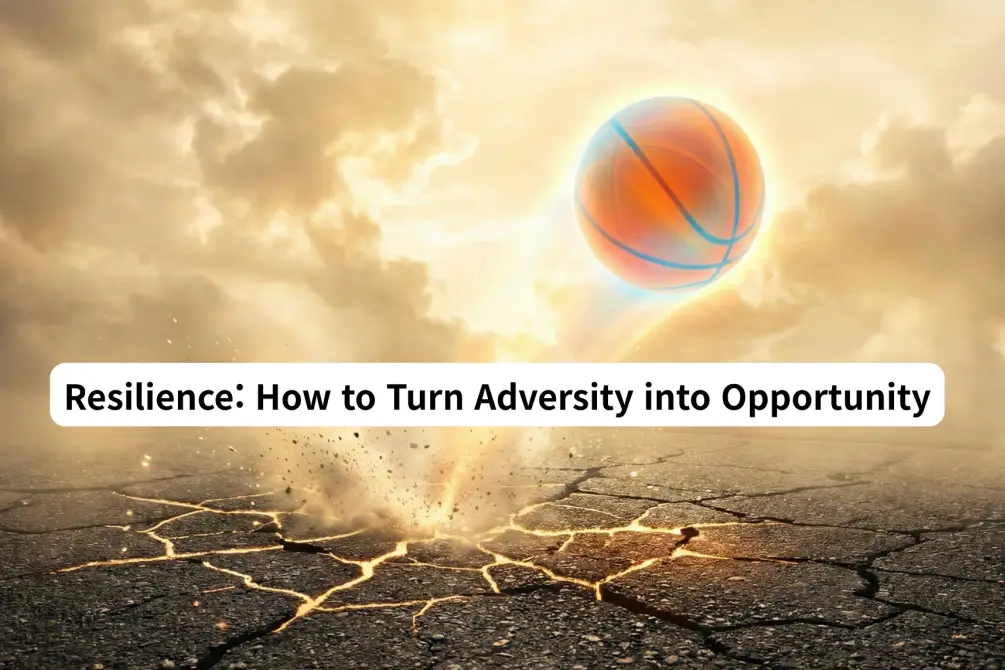
Many people mistakenly equate resilience with mere ‘endurance in the face of hardship’. True resilience isn’t just about enduring hardship. It’s the ability to rebound upward after hitting rock bottom.
Fairy tale writer Hans Christian Andersen once confessed that the hardships of his childhood, including poverty and an unattractive appearance, enabled him to write stories such as The Little Match Girl and The Ugly Duckling. Likewise, Abraham Lincoln endured dozens of election defeats and deep mental anguish. These experiences ultimately became the nourishment that forged him into a great president.
The same holds true in the workplace. Those who have always walked a comfortable path are easily shaken in crises. Conversely, colleagues who have weathered rough waves and solved problems truly shine in moments of crisis. Only those who have fallen before truly understand how to rise when it matters.
What does not kill me makes me stronger – Nietzsche
In some ways, resilience aligns with the philosophy of German thinker Friedrich Nietzsche.
This famous quote from Nietzsche goes beyond mere ‘endurance,’ offering insight into the vitality of life. Pain and adversity seek to destroy us, but through enduring and overcoming them, the human spirit and will evolve to a far higher level than before.
2. The Secret of My Inner “Happiness Thermostat”
Daniel Gilbert, a professor of psychology at Harvard University, studied how frequently our happiness-related emotions fluctuate.
We tend to believe that winning the lottery will make us happy forever, or that suffering an unexpected accident will make us miserable forever. However, research shows that the impact of external events lasts at most 3 months to a year.
Over time, most people return to a personal baseline of happiness, often referred to as the “happiness thermostat.”
| Item | External Event (Temporary) | Happiness Setpoint (Fundamental) |
| Influencing Factor | Lottery win, promotion, accident, exam pass | Brain neural circuits, thought patterns |
| Duration | Approximately 2-3 months (adaptation effect) | Lifetime baseline |
| Method of Change | Environmental change (has limits) | Internal communication and brain training |
Ultimately, what matters isn’t what happens to you, but where your baseline level of happiness sits.
Someone with a baseline of 10 out of 100 will quickly become depressed even after something joyful happens, while someone with a baseline of 80 will quickly recover their usual happy feelings even after facing hardship.
⚡ If you want to be happier, focus on raising your baseline happiness index rather than struggling to change external conditions.
*Reference: Harvard Gazette – The Science of Happiness
3. Strategies for Changing Brain Habits: The ABCDE Model
We live within the stories we create based on our experiences. This means ‘stories’ can be subjectively edited in countless ways.
People accustomed to negative thinking habitually interpret and generalize bad events negatively. This habit internalizes negative narratives, ultimately lowering happiness.
To counter this tendency, positive psychology proposes the ABCDE model.
- A (Adversity): A challenge or unfavorable event occurs.
Ex) Being passed over for a promotion. - B (Belief): The belief or interpretation I hold about that event.
Ex) Resenting, “I was passed over because I lack ability.” - C (Consequence): The emotions or behaviors that arise from that belief.
Ex) Becoming withdrawn and timid. - D (Disputation): Logically re-examining and challenging my belief.
Ex) ‘Is my entire life really a problem? Maybe I just had bad luck, and I can get promoted next time? The company isn’t everything, so why not develop other talents? - E (Energization): The positive energy generated through disputation.
Ex) Building skills through self-development outside of work.
This exercise activates the medial prefrontal cortex (mPFC), responsible for emotions and decision-making.
The key insight is recognizing that your belief (B) may not be true. At that moment, the vicious cycle of unhappiness breaks.
*Reference: PositivePsychology.com(ABCDE Model)
4. Mental management starts with the body, not the mind
When your mind is troubled, sitting still and meditating isn’t always the answer. Professor Kim Joo-hwan emphasizes ‘exercise’ as the most reliable way to make the brain happy.
Exercise triggers the release of BDNF, a protein that promotes brain cell growth. This is like the best natural antidepressant with no side effects.
- Cardio exercise: Strengthens cardiovascular function, ensuring smooth oxygen supply to the brain.
- Strength training: Boosts physical self-esteem and builds stress resilience.
- Group dance/aerobics: Synchronizing movements with others delivers powerful pleasure signals to the brain.
⚡ When your mind feels exhausted and anxious, the first thing you should do is exercise. Your body must move for your brain to awaken, and your brain must awaken for resilience to activate.
*Reference1 : Resilience by Professor Kim Joo-hwan (Summary of the Author’s YouTube Lecture)
*Reference2 : American Psychological Association – Resilience Guide

INSIGHT
Resilience isn’t an innate talent; it’s a ‘skill’ you can train daily. Start practicing these three things today.
⚡ Action Plan for Real Life
- Raise your brain’s baseline for happiness through consistent exercise.
- Correct negative storytelling habits using the ABCDE model.
- Think of just three things you’re grateful for among what you have.
Small actions and subtle shifts in thinking compound over time, shaping a more resilient version of yourself.
I hope this helps you find your inner strength. This was Michael from Wstorybook.