Why Did the Electric Vehicle Revolution Stall? Global Automakers Revise Their EV Strategies
Hello! I’m Michael from WStorybook.
Just three years ago, the global auto industry was swept up in a collective euphoria. When Tesla’s market capitalization surpassed $1 trillion, legacy automakers believed that building another battery plant was all it would take to see their own stock prices soar.
Volkswagen declared that 80% of its European sales would be electric by 2030. GM promised to phase out internal combustion engines entirely by 2035. The future seemed obvious, electric vehicles would dominate the roads.
Yet by 2026, those dazzling promises have collided with economic reality.
Today, we examine why the EV revolution has suddenly lost momentum, how this shift reshapes the investment landscape, and what strategies investors should consider next.
1. The End of Subsidies: When Artificial Demand Disappears
Government incentives were the scaffolding of EV demand and that scaffolding is being dismantled.
- United States: The Trump administration removed the $7,500 consumer tax credit and eased emissions rules, shaking the foundation of EV economics.
- Europe: The EU effectively retreated from its 2035 combustion ban, revising it to a 90% reduction target under pressure from manufacturers.
- Germany: EV sales plunged nearly 40% immediately after subsidies ended clear evidence that demand was policy-driven, not organic.
Insight: The EV boom followed the flow of government money. Once that money disappeared, consumers returned to practical choices.
2. Automakers in Retreat: A Financial Reality Check
Traditional manufacturers are now paying dearly for their all-in EV bets.
| Company | Key Actions & Financial Status | Note |
| Ford | $19.5B write-down; EV division (Model E) losing $5.1B annually | Pivoting to Hybrids & EREVs |
| GM | $1.6B cost allocation to scale back production | Significantly lowered 2026 targets |
| Volkswagen | Preparing to close German factories for the first time in 88 years | Excess capacity & weak demand |
| Tesla | 2030 sales target of 20M vehicles effectively scrapped | Shifting focus to AI & Robotics |
Ford CEO Jim Farley admitted the core problem:
“As vehicles get larger, EV margins collapse due to battery costs, while combustion vehicles become more profitable.”
*Note: Ford Says Large Electric Trucks And SUVs Have ‘Unresolvable’ Problems
3. Why Consumers Turned Away: Cars Becoming Appliances
We assumed EVs would age like classic Porsches. Instead, they depreciate like smartphones.
- Brutal depreciation: A 1–2 year-old EV is treated as outdated hardware. In the UK, Audi e-tron resale values collapsed far faster than diesel models.
- Reliability concerns: Consumer Reports ranked Tesla among the least reliable brands. Hertz sold 20,000 EVs citing high repair costs and weak customer demand.
- Inconvenience: For many drivers, an hour at a charger feels like a downgrade, not progress.
Mainstream buyers want transportation – not a lifestyle experiment.
4. Battery Geopolitics: China’s Quiet Victory
While Western firms chased regulatory credits, China conquered the supply chain.
- 85% of global lithium-ion battery capacity sits in China
- Dominance in graphite, lithium processing, and cathode materials
- BYD bypassing tariffs via factories in Europe and Mexico
Western automakers risk becoming assemblers reliant on Chinese “hearts” that represent 40% of vehicle value.
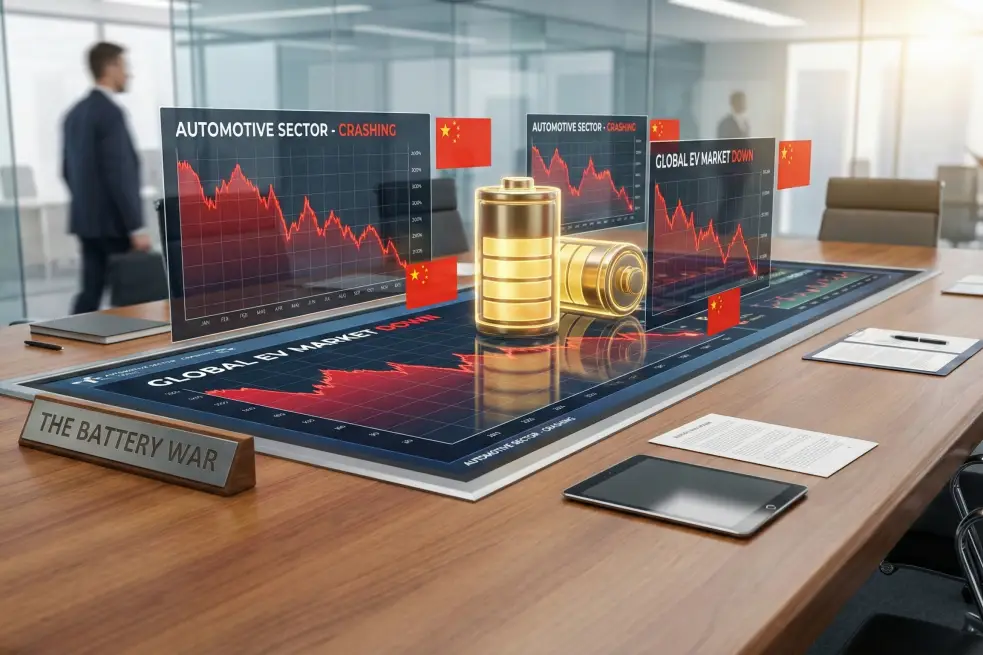
💡 Investor Takeaways: 4 Strategic Shifts
The EV story isn’t over. It’s normalizing. Politics met economics.
- Avoid pure EV startups
Firms like Lucid lose hundreds of thousands per vehicle. Survival and cash flow now matter more than vision. - Hybrid & EREV renaissance
Extended-Range EVs. Now embraced by Ford and GM – offer a pragmatic bridge technology. - Energy infrastructure matters
AI data centers are competing for power. Rising electricity costs could further pressure EV economics. - Rethink Tesla
View Tesla as an AI & robotics company, not a carmaker. FSD and Optimus progress matter more than unit sales.
The market is returning to fundamentals. Subsidies can create trends, but they cannot create sustainable businesses. The next phase will reward companies with real technology, real margins, and respect for consumer reality.
We must adapt accordingly.