
With Global Debt Over $100 Trillion, Is Your Money Really Safe?
Hello! I’m Michael from WStorybook.
The most fundamental keyword defining the global economy this year is undoubtedly debt. By the end of 2025, global government debt is estimated to have already surpassed the staggering $100 trillion mark.
Today, we will delve deep into the precarious economic ground we stand on and discuss the survival strategies investors must adopt to navigate this environment.

Why $100 Trillion is a Critical Breaking Point
Over the past 25 years, global government debt has surged relentlessly. Notably, the debt-to-GDP ratio in developed nations has surpassed 100%, a level not seen since 1945, in the immediate aftermath of World War II.
The catalysts for this debt explosion are clear:
- Emergency responses to the 2008 Global Financial Crisis.
- Astronomical liquidity injections to overcome the 2020 pandemic.
- The surge in energy and defense costs following the Russia-Ukraine war.
In the past, borrowing was manageable due to low interest rates. However, the landscape has shifted. As we enter a prolonged era of high interest rates, the interest costs on all newly issued bonds are snowballing at an alarming rate.
Cracks in Japan’s Bond Market: The Shattering Myth of Safe Assets
Which country holds the world’s largest debt? Japan.
Japan’s debt-to-GDP ratio currently stands at 240%, a staggering leap from the 50% level seen in 1990. Unprecedented shifts are now unfolding in Japan’s bond market; yields on 20-year and 30-year government bonds have hit 25-year highs and continue to climb.
This signals that the market no longer fully trusts the government’s debt management capabilities.
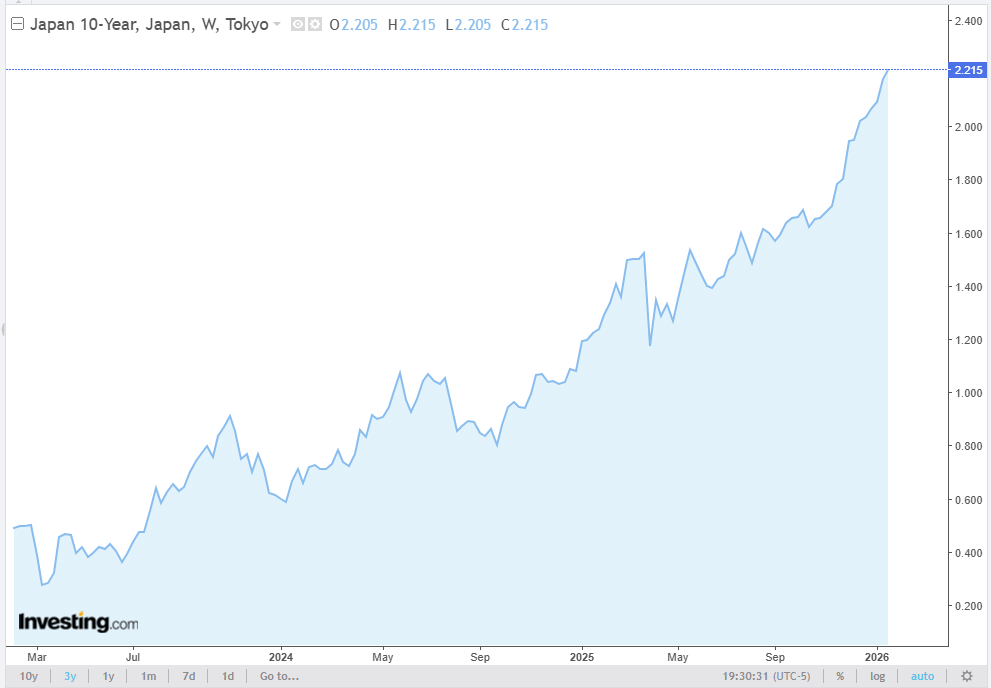
Even government bonds, once considered the ultimate safe haven, can become risky assets in the face of extreme interest rate volatility. Investors must take this reality seriously.
America’s Fiscal Burden and the Resurgence of “Bond Vigilantes”
The United States is not immune to these debt pressures. America’s current debt-to-GDP ratio stands at approximately 98% and is projected to soar to 125% over the next decade.
Particularly noteworthy is the fiscal direction of the administration. While some argue that tax cuts and tariffs will drive enough growth to outpace the debt, the market response has been lukewarm. This is evidenced by recent U.S. Treasury auctions where demand plummeted, causing yields to spike.
This rise in bond yields is driven by the influence of “Bond Vigilantes.” These are investors who dump bonds to force interest rates higher when they perceive a government is spending excessively or fueling inflation. It proves that the market’s harsh judgment is often more powerful than political promises.
An Era Where Interest Costs Surpass Defense Spending
Last year, the U.S. government paid $880 billion in interest costs alone. For the first time, this figure has eclipsed spending on national defense.
| Category | 2025 Expenditure (Estimated) | Notes |
| Social Security & Medicare | Approx. 60%+ | Social Security, Medicare, etc. |
| Defense | Approx. 14% | Largest discretionary spending |
| Debt Interest Costs | Approx. 15% ($880B+) | Rising rapidly |
Financial historian Niall Ferguson once warned that any major power that spends more on interest than on defense finds it difficult to maintain its status. This means a nation’s resources are being consumed by past obligations rather than productive future investments.
*Source: Hoover Institution, 2025

Survival Strategies: How to Prepare
The government debt crisis presents us with two primary scenarios:
- Governments slow growth by raising taxes and cutting spending.
- Governments allow inflation to erode the real value of the debt.
Since politicians rarely favor spending cuts, I anticipate that inflation will remain a persistent threat. To protect your assets, I propose these three actions:
- Diversify Asset Allocation: Increase exposure to tangible assets with proven inflation-hedging capabilities, such as blue-chip stocks, real estate, and gold.
- Make Interest Rate Monitoring a Habit: Identify which assets in your portfolio become most vulnerable when long-term Treasury yields spike.
- Look Beyond Political Slogans: Scrutinize the “rosy growth” promised by politicians. Always verify the fiscal reality behind the rhetoric.
A castle built on debt may be dazzling, but its foundation is fragile. Now is the time to examine the cracks hidden beneath the glittering facade and prepare for the debt that lies beneath.